
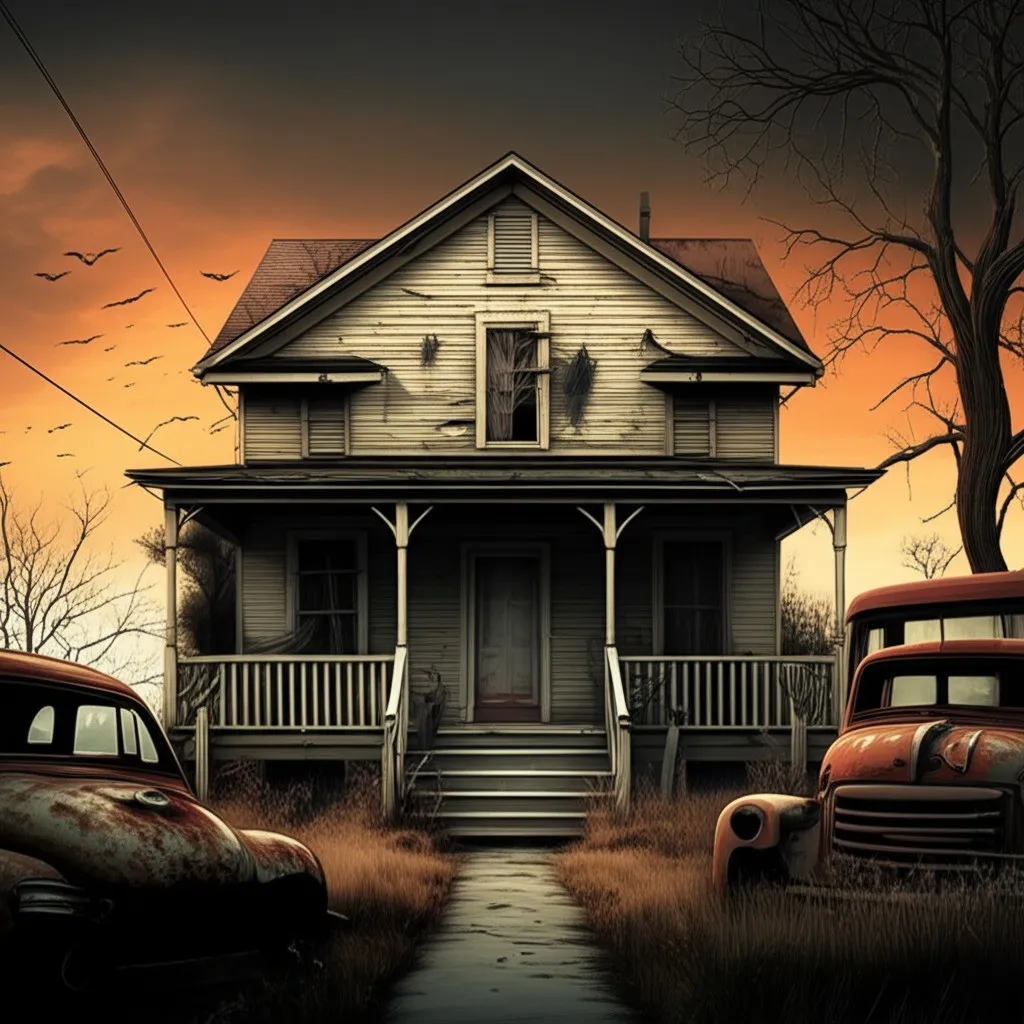

Few films have seared themselves into the collective consciousness quite like Tobe Hooper’s 1974 masterpiece, The Texas Chainsaw Massacre. From its gritty, documentary-like aesthetic to its unforgettable antagonist, Leatherface, the movie redefined horror, paving the way for the slasher genre. A significant part of its enduring terror stems from the opening claim: “The film you are about to see is an account of the tragedy which befell a group of five youths, in particular Sally Hardesty… It is all the more tragic in that they were young. But, had they lived very, very long lives, they could not have expected, nor would they have wished to see, as much of the macabre as they were to see that day. For them, an idyllic summer afternoon drive became a nightmare. The events of that day were to lead to the discovery of one of the most bizarre crimes in the annals of American history, The Texas Chainsaw Massacre.”
Also Read:- Wrath A Seven Deadly Sins Story
This chilling prologue, delivered with the gravitas of a news report, immediately instilled a sense of dread rooted in reality. Audiences walked out of theaters genuinely believing they had just witnessed a recreation of actual events, specifically a Texas Chainsaw Massacre True Story House where such atrocities had unfolded. The truth, as often happens, is a complex tapestry woven with threads of real-life horror, cinematic genius, and a location that has become an iconic piece of film history. There isn’t one single Texas Chainsaw Massacre True Story House in the way many imagine, but rather two distinct entities that contribute to the enduring legend: the house of the notorious killer who inspired the film, and the physical structure used as the horrific backdrop for the movie itself.
Ed Gein: The Real-Life Inspiration Behind the Carnage
To truly understand the “true story” behind the Texas Chainsaw Massacre True Story House, one must first journey not to the dusty plains of Texas, but to the isolated farmlands of Plainfield, Wisconsin, and delve into the chilling narrative of Edward Theodore Gein. While the film’s events never literally occurred in Texas as depicted, the disturbing reality of Gein’s life provided a terrifying template for its most grotesque elements.
Ed Gein was a quiet, reclusive man, deeply dominated by his fanatically religious mother, Augusta, who instilled in him a fear of women and the evils of the world. After her death in 1945, Gein’s already fragile psyche unraveled completely. He descended into a horrifying obsession with death and the human body, driven by a desire to resurrect his mother and create a “woman suit” to transform himself.
His crimes, discovered in November 1957, shocked the nation. Local authorities investigating the disappearance of hardware store owner Bernice Worden stumbled upon Gein’s isolated farmhouse. What they found within was beyond comprehension: human remains scattered throughout the house, used to create macabre household items. Bowls fashioned from skulls, chairs upholstered with human skin, leggings made from human leg skin, a “body suit” comprising the skin of a woman’s torso, and the ultimate horror – the decapitated head of Bernice Worden hanging in a shed, alongside the body of another victim, Mary Hogan, who had disappeared three years prior.
Gein confessed to killing both women and to extensively robbing graves in local cemeteries, primarily to exhume recently buried female bodies that resembled his mother. He wasn’t a family of cannibals, but the sheer depravity, the use of human remains as furniture and clothing, and the isolated, dilapidated farmhouse environment painted a picture of unimaginable horror. This was the real-life genesis for Leatherface’s skin mask, the grotesque decorations of the Sawyer family home, and the unsettling idea of a deranged killer living in a secluded, rural setting. While Gein’s actual dwelling in Plainfield, Wisconsin, was the original Texas Chainsaw Massacre True Story House of inspiration, it was ultimately demolished after a suspicious fire in 1958, erasing a physical monument to his monstrous acts.
Also Read:- Man On Fire True Story
The Iconic Film Location: The Texas Chainsaw Massacre House (1974)
With the horrifying blueprint of Ed Gein’s pathology in mind, director Tobe Hooper and co-writer Kim Henkel set out to craft a fictional narrative that captured the essence of such depravity, transplanting it to the desolate Texas landscape. Their goal was to create a modern-day horror fable, stripped of glamour and steeped in a disturbing, almost documentary-style realism. For this, they needed a physical manifestation of terror – a Texas Chainsaw Massacre True Story House that would become synonymous with dread.
They found their perfect, albeit unassuming, setting in a Victorian-style farmhouse located on Quick Hill Road, just outside Round Rock, Texas. Built in the early 1900s, this picturesque L-plan farmhouse, with its wrap-around porch and classic Southern charm, belied the horrors it would soon host on screen. The exterior, with its weathered wood and slightly overgrown surroundings, perfectly conveyed an air of forgotten isolation, an ideal hideout for the macabre Sawyer family.
Filming inside the house was notoriously grueling. The low budget, the scorching Texas summer heat, and the constant smell of animal remains (used to simulate gore) pushed the cast and crew to their limits, contributing to the film’s raw, visceral authenticity. The iconic dinner scene, for instance, was reportedly filmed over 26 hours in sweltering conditions with actual decaying animal parts, driving the actors to genuine emotional distress – a performance enhancing technique that was as unintentional as it was effective. This farmhouse, with its real-world heat and grime, became the definitive visual representation of the Texas Chainsaw Massacre True Story House for generations of horror fans.
Also Read:- Lisa Aguilar Real Story
From Screen to Sanctuary: The Texas Chainsaw Massacre True Story House’s Transformation
For years after its release, the original Texas Chainsaw Massacre True Story House remained on Quick Hill Road, a silent testament to its cinematic infamy. However, as suburban development encroached upon the once-secluded rural landscape, the house faced an uncertain future. In 1998, a visionary entrepreneur, Mike Usrey, decided to rescue this piece of horror history. He purchased the house and orchestrated its meticulous, painstaking relocation.
The entire structure was carefully dismantled, transported in pieces approximately 60 miles west to the small town of Kingsland, Texas. There, it was painstakingly reassembled, restored, and given a remarkable new lease on life. This journey was not merely a physical relocation but a symbolic transformation. The house that had once embodied cinematic terror was reborn as something entirely different.
Today, the original Texas Chainsaw Massacre True Story House stands proudly as the Grand Central Cafe at The Antlers Hotel in Kingsland. The beautiful Victorian architecture has been preserved, painted in vibrant colors, and lovingly maintained. Visitors can now dine in the very rooms where Leatherface pursued his victims, where Sally Hardesty screamed, and where the infamous dinner scene unfolded. The experience is surreal: enjoying delicious food in a charming, elegant setting, all while knowing the house’s dark cinematic past. It’s a testament to the power of film and the enduring fascination with its physical remnants. While it no longer exudes the raw horror of the film, its historical significance as the Texas Chainsaw Massacre True Story House location remains palpable.
Also Read:- Fatal Honeymoon True Story
The Enduring Allure of the Texas Chainsaw Massacre True Story House Myth
The myth of the Texas Chainsaw Massacre True Story House – the idea that a deranged family actually lived and committed unspeakable acts within its walls – continues to captivate audiences. This blurring of lines between fact and fiction is precisely what Tobe Hooper intended. By using the “true story” disclaimer, he tapped into a primal fear: the idea that such evil could exist, lurking just beyond the familiar, in the seemingly benign American heartland.
The film’s gritty aesthetic, its hand-held camerawork, and the almost unbearable tension made it feel less like a movie and more like a horrific news report. This illusion, combined with the visceral inspiration drawn from Ed Gein’s real-life atrocities, created a powerful urban legend that has persisted for decades. Even though the “true story” claim is largely a marketing ploy, the genuine discomfort it instills is undeniable. It forces viewers to confront the uncomfortable truth that while the specific events of The Texas Chainsaw Massacre are fictional, the capacity for human depravity it explores is very real.
The attraction to the actual film house, now the Grand Central Cafe, is a testament to this morbid curiosity. People visit not just for the food, but to stand on hallowed ground, to feel a connection to an iconic piece of horror cinema. It’s a safe way to brush up against the darkness, a chance to reconcile the fictional horror with its benign present.
Also Read:- Raising the Bar The Alma Richards Story
Visiting the Ghosts of the Past: Reflections on the Texas Chainsaw Massacre True Story House
The concept of the Texas Chainsaw Massacre True Story House encompasses both the haunting specter of Ed Gein’s actual dwelling and the now-restored Victorian farmhouse that served as the terrifying backdrop for Tobe Hooper’s film. Each contributes a unique layer to the legend, demonstrating how real-life horrors can inspire fictional nightmares, and how those fictional nightmares can, in turn, create their own tangible legacies.
Visiting the Grand Central Cafe today offers a fascinating juxtaposition. It’s a beautiful, welcoming place, full of life and laughter, a world away from the chilling dread of the film. Yet, for those who know its history, there’s an undeniable shiver, a phantom echo of screams and the whir of a chainsaw. It serves as a reminder of the power of storytelling, the indelible mark left by cinematic artistry, and our enduring fascination with the dark corners of human nature.
The real “true story” isn’t about a single house where everything happened. It’s about how the macabre reality of one man’s crimes (Ed Gein) fused with the creative vision of filmmakers to craft a fictional narrative so potent, it convinced the world it was real. And in doing so, it transformed a simple Texas farmhouse into an immortal, albeit unsettling, icon: the Texas Chainsaw Massacre True Story House. It stands as a monument not just to horror, but to the intricate, often terrifying, relationship between reality and myth.
Check the Latest Updates Here
Discover more from StoryDunia
Subscribe to get the latest posts sent to your email.