
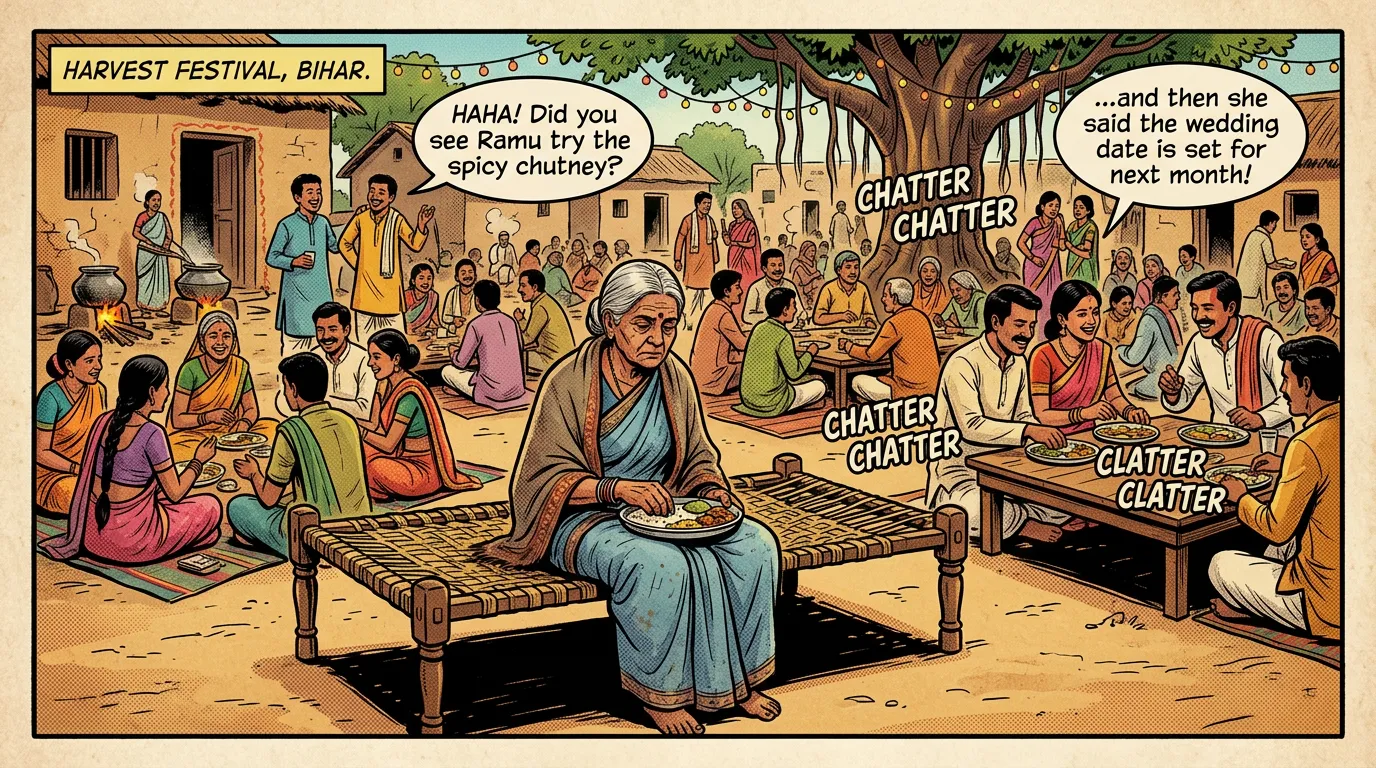

In the vast landscape of Hindi literature, Munshi Premchand stands as a titan who didn’t just write stories but captured the very soul of the Indian common man. Among his many masterpieces, “Boodhi Kaki” (The Old Aunt) remains one of the most emotionally charged narratives, exploring the themes of aging, the loss of dignity, and the inherent selfishness of human nature. Much like the intricate social structures depicted in Bade Ghar Ki Beti, Boodhi Kaki highlights the friction between tradition and individual empathy.
The Fragile Reality of Old Age
Boodhi Kaki is an old, blind woman who has lost everyone except her nephew, Buddhiram. In a moment of hope for a peaceful sunset to her life, she transferred all her property to him. However, the promise of care and respect soon turned into a nightmare of neglect. Kaki’s world had shrunk to a small, dark room, and her only connection to the outside world was her sense of smell and her voice, which she used to cry out when her hunger became unbearable.
This portrayal of sensory longing and physical hardship is a recurring theme in Premchand’s work. It reminds readers of the harsh survival conditions faced by Halku in Poos ki Raat, where the environment itself becomes an adversary to the protagonist’s well-being. For Kaki, the adversary wasn’t the cold night, but the indifference of her own kin.
A Feast of Neglect
The story reaches its emotional peak during the engagement ceremony of Buddhiram’s son. The house is filled with the aroma of ghee, sizzling puris, and spicy curries. For Kaki, these scents are not just food; they are memories of a life where she was once the mistress of the house. As the guests feast, Kaki sits in her room, her mouth watering, waiting for someone to remember her.
Her hunger eventually drives her to crawl toward the kitchen, only to be met with the wrath of Rupa, Buddhiram’s wife. Rupa’s harsh words and the physical shoving of the old woman represent a societal failure to honor those who have sacrificed their youth for the next generation. The struggle of Kaki is as visceral as the physical toil seen in Do Bailon Ki Katha, where the silent suffering of living beings calls out for compassion.
The Innocence of Ladli
Amidst the cruelty of the adults, a small light shines in the form of Ladli, Buddhiram’s young daughter. While her parents see Kaki as a burden, Ladli sees her as a companion. She saves a portion of her own sweets for Kaki, but knowing she can’t satisfy the old woman’s hunger alone, she leads Kaki to the place where the guests had eaten.
The scene where Kaki picks up leftover scraps of food from the used leaf plates is one of the most heart-wrenching moments in literature. It is a stinging critique of a society that allows its elders to fall into such deep humiliation while celebrating wealth and status.
A Moment of Redemption
The story concludes with Rupa witnessing Kaki eating the leftovers. The sight of her aunt-in-law, who had given them everything, scavenging for scraps hits Rupa like a physical blow. It awakens a long-dormant conscience. Rupa finally realizes that the wealth they enjoy is built on the sacrifice of this old woman. In an act of late but necessary penance, Rupa prepares a fresh plate of food and serves Kaki with the respect she deserves.
“Boodhi Kaki” is more than just a story about a hungry old woman; it is a call for empathy. It reminds us that while we progress as a society, we must not leave behind the values of compassion and dignity. Premchand’s ability to weave such a profound moral lesson into a simple village setting is what makes his work eternal.
Recommended Reads
Discover more from StoryDunia
Subscribe to get the latest posts sent to your email.